Seasonal Moon Phases Guiding Nighttime Picking Schedules Among Austria's Cooperative Vineyard Groups
Geschrieben von Jordan Vogel · 7.9.2026
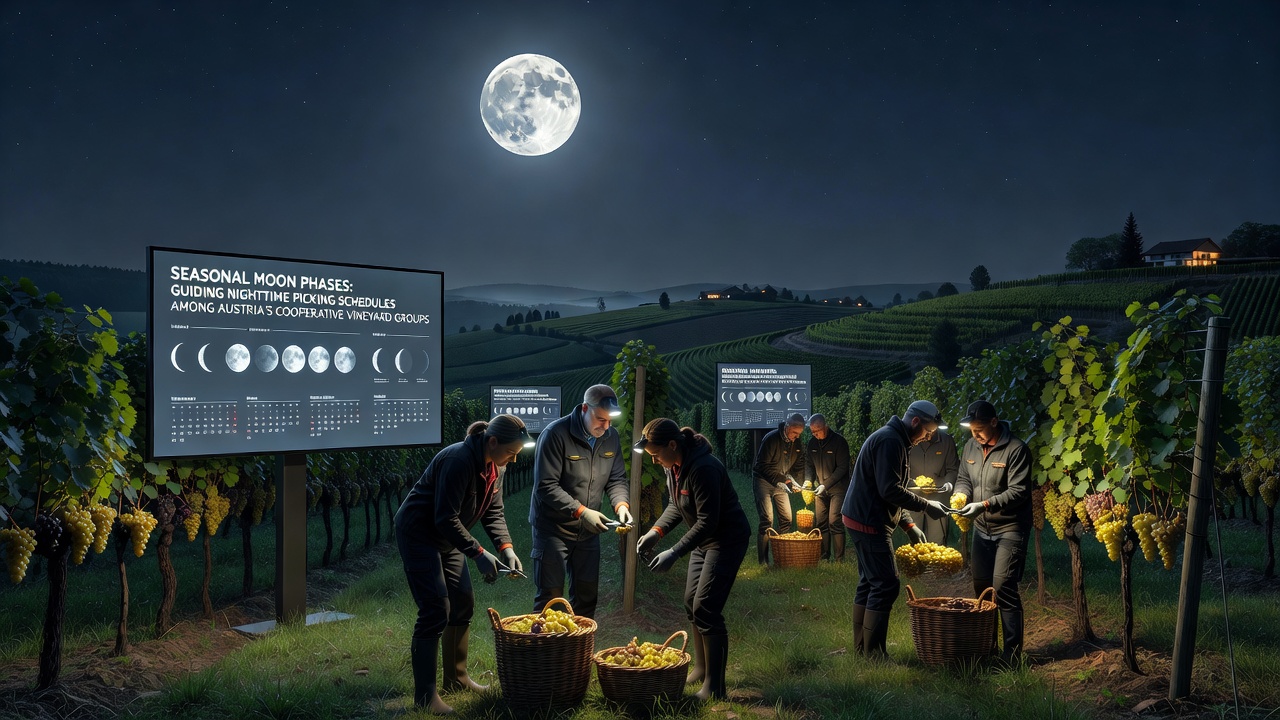
Seasonal Moon Phases Guiding Nighttime Picking Schedules Among Austria's Cooperative Vineyard Groups
Traditional Lunar Influences on Harvest Timing
Cooperative vineyard groups across Austria's wine regions have long aligned grape harvesting activities with seasonal moon phases, a practice that coordinates nighttime picking schedules to optimize fruit condition during cooler evening hours. These groups, operating in areas such as Lower Austria and Burgenland, track lunar cycles to determine when sap flow and grape hydration reach levels that support efficient collection without daytime heat stress. Data from agricultural monitoring programs shows that full moon periods often coincide with increased nighttime activity because gravitational effects on plant moisture become more pronounced, allowing crews to work under natural illumination while temperatures drop below 15 degrees Celsius.
Observers note that waxing and waning phases influence decisions on which parcels receive priority during September harvests, since certain cycles correlate with reduced acidity fluctuations in varieties like Grüner Veltliner and Zweigelt. Cooperative records indicate that teams divide labor across multiple estates to cover larger areas during optimal lunar windows, and this coordination reduces the need for mechanical cooling equipment that larger independent operations might deploy. Those who study viticultural calendars point out that the approach integrates centuries-old observations with modern logistics, creating schedules that account for both astronomical data and local weather patterns recorded by regional meteorological stations.
Nighttime Operations and Cooperative Coordination
Nighttime picking under specific moon phases allows cooperative members to maintain consistent grape temperatures from vine to press, which helps preserve aromatic compounds that daytime heat can degrade. In practice, groups assign shifts based on moonrise times published in annual agricultural almanacs, enabling workers to start after sunset and finish before dawn when humidity levels stabilize. Evidence from harvest logs reveals that this timing reduces berry oxidation rates, particularly during periods when the moon reaches its fullest illumination and extends workable hours without artificial lighting investments.
September 2026 features a harvest moon phase that cooperative planners have already incorporated into preliminary schedules, with full moon occurring on the 17th according to astronomical projections that align with traditional calendars used by Austrian wine associations. Crews prepare equipment and transport routes in advance so that multiple estates can share resources during the concentrated nighttime window. Researchers have documented similar patterns in other European regions, yet Austria's cooperative model stands out because shared ownership structures permit rapid reallocation of labor across vineyards that follow identical lunar guidelines.
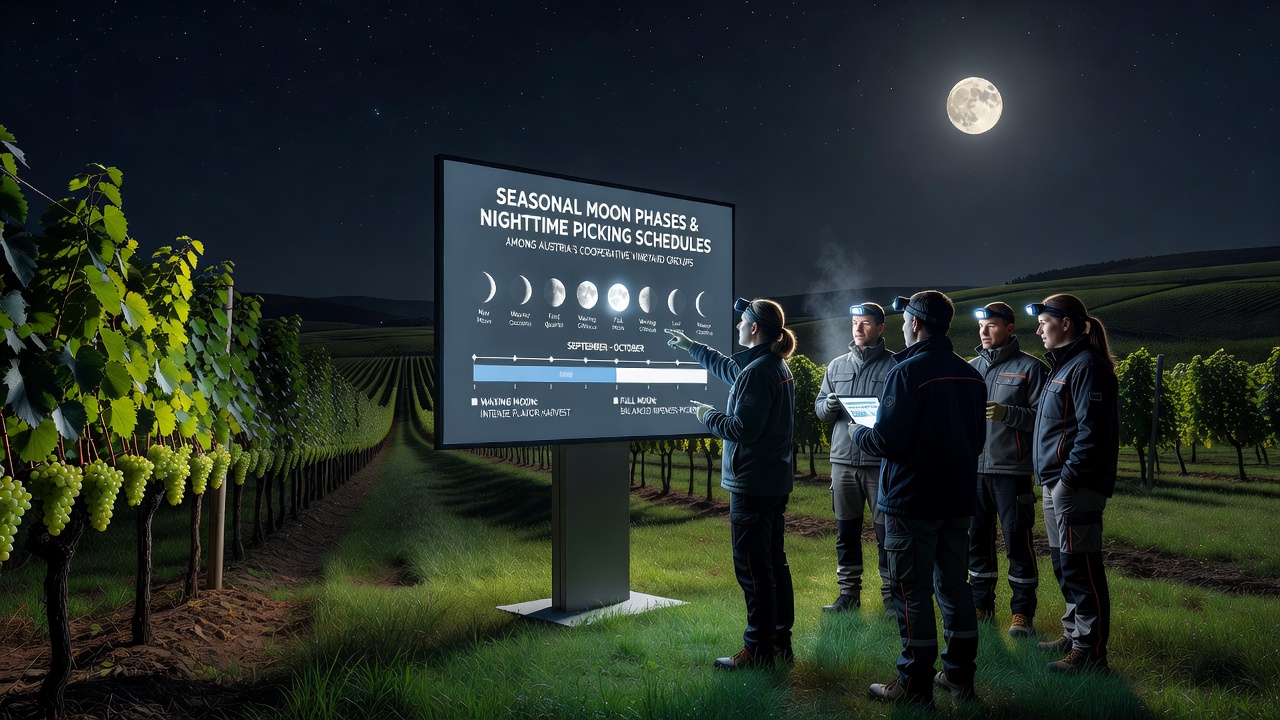
Data on Lunar Cycles and Grape Quality Metrics
Studies compiled by the Australian Wine Research Institute demonstrate measurable differences in phenolic development when harvests occur during waning moon phases versus new moon intervals, and Austrian cooperatives reference comparable datasets when refining their own protocols. Figures reveal that nighttime collections under waxing gibbous conditions often yield musts with lower pH variability, a factor that cooperative cellars track through standardized laboratory sampling. Government agricultural reports from Canada's federal ministry of agriculture further support the observation that gravitational influences on soil moisture affect root uptake patterns, prompting groups to adjust picking sequences accordingly.
Cooperative records spanning multiple vintages show that adherence to these cycles correlates with fewer instances of fruit spoilage during transport, since cooler nighttime air reduces respiration rates in freshly picked clusters. Those managing shared facilities note that synchronized schedules also streamline fermentation tank usage, because batches arrive in concentrated waves that match the capacity of collective pressing equipment. What's interesting is how digital tools now overlay satellite moon phase data onto vineyard maps, allowing planners to forecast exact start times weeks ahead and distribute tasks among member farms without overlap.
Integration of Modern Tools with Historical Practices
Modern cooperatives combine lunar calendars with GPS-guided equipment and real-time temperature sensors to refine nighttime operations beyond what earlier generations could achieve. Agricultural extension services in the European Union have published guidelines that recognize these hybrid methods, and Austrian groups participate in pilot programs that test automated alerts for upcoming moon phase transitions. Evidence suggests that the combination improves labor efficiency because workers know in advance which nights offer the longest safe windows before sunrise temperatures climb.
One documented case involves a cooperative in the Kamptal region that adjusted its 2024 schedule after cross-referencing lunar data with soil moisture readings from embedded probes, resulting in measurable reductions in water loss from harvested fruit. Such examples illustrate how the practice evolves without abandoning its astronomical foundation, and similar adjustments appear in planning documents for future seasons including 2026.
Conclusion
Austria's cooperative vineyard groups maintain nighttime picking schedules that follow seasonal moon phases because the alignment supports consistent fruit quality across shared operations. Records, research findings, and astronomical projections all contribute to calendars that coordinate labor and equipment during optimal lunar windows. As September 2026 approaches, these established methods continue to guide harvest activities in regions where collective ownership structures make such synchronization practical and measurable.