River Currents and Soil Layers Shaping Flavor Development in Austria's Overlooked Eastern Vineyard Pockets
Geschrieben von Bianca Schwarz · 26.8.2026
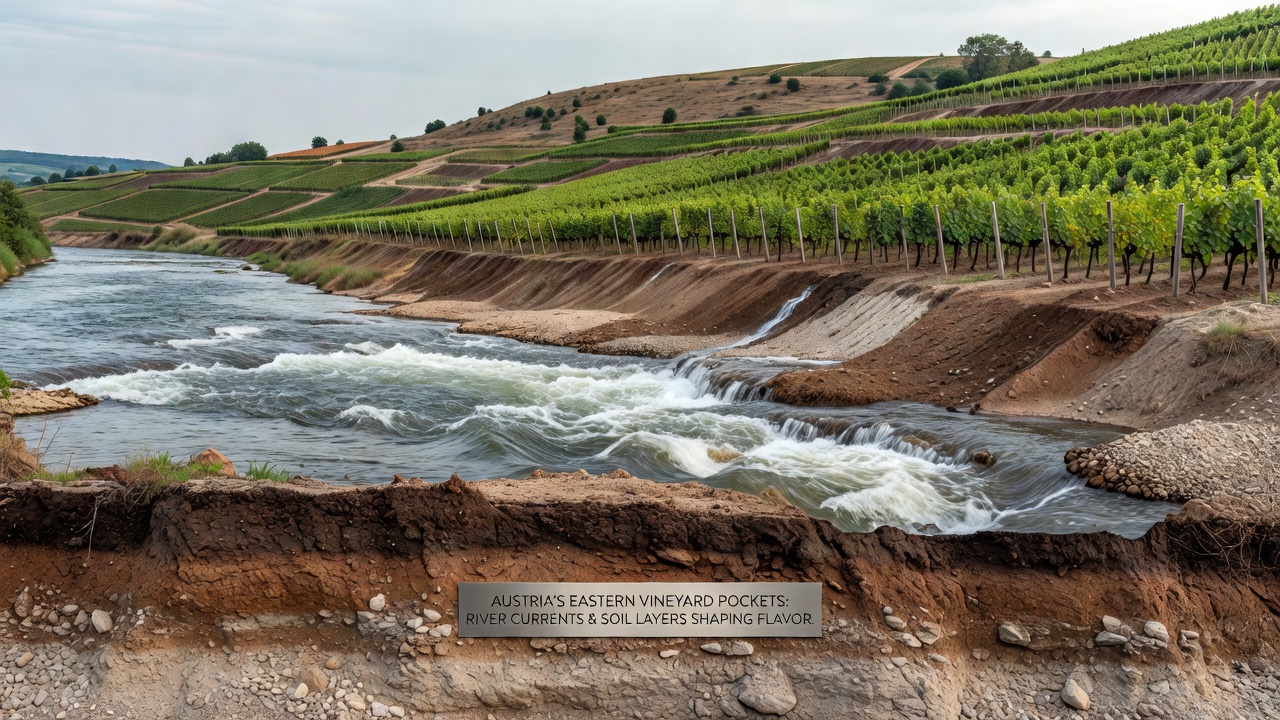
River Currents and Soil Layers Shaping Flavor Development in Austria's Overlooked Eastern Vineyard Pockets
Eastern Austria features several lesser-known vineyard areas where river currents interact with complex soil layers to influence grape development and wine characteristics, and observers note that these pockets sit along the Danube and its tributaries as well as near the Neusiedler See basin. River flows deposit fine sediments during seasonal floods while also moderating temperatures through evaporative cooling which creates microclimates that slow grape ripening and preserve acidity levels in varieties such as Grüner Veltliner and Blaufränkisch.
River Currents and Their Influence on Vineyard Conditions
Water movement from the Danube carries mineral particles and organic matter downstream before depositing them in bends and floodplains where vines take root, and this process builds alluvial soils that vary in texture from sandy loams near the banks to heavier clays farther inland. Data from geological surveys show that current speeds determine sediment size with faster flows leaving coarser gravels that improve drainage whereas slower sections accumulate silts which retain moisture during dry periods. Researchers at institutions including BOKU University have documented how these patterns repeat across overlooked sites east of Vienna where vineyards occupy narrow terraces carved by centuries of river activity.
Seasonal fluctuations play a further role because spring meltwater surges redistribute nutrients while summer low flows allow salt accumulation in certain pockets near the Hungarian border, and winemakers in these zones adjust canopy management to counteract the effects on vine vigor. Studies indicate that such hydrological cycles contribute to flavor compounds by regulating water stress which concentrates phenolic substances and aromatic precursors in the grapes without pushing the plants into excessive drought.
Soil Layers and Their Contribution to Terroir
Multiple strata appear in these eastern locations with topsoils often consisting of loess deposits from ancient wind action overlying limestone or gravel beds formed by prehistoric riverbeds, and deeper layers frequently contain marine sediments from the former Pannonian Sea that supply potassium and magnesium. Soil scientists observe that root systems penetrate different horizons at varying rates which allows vines to access a broad nutrient spectrum that translates into layered flavors ranging from citrus and stone fruit notes in younger profiles to herbal and mineral tones when roots reach older substrates.
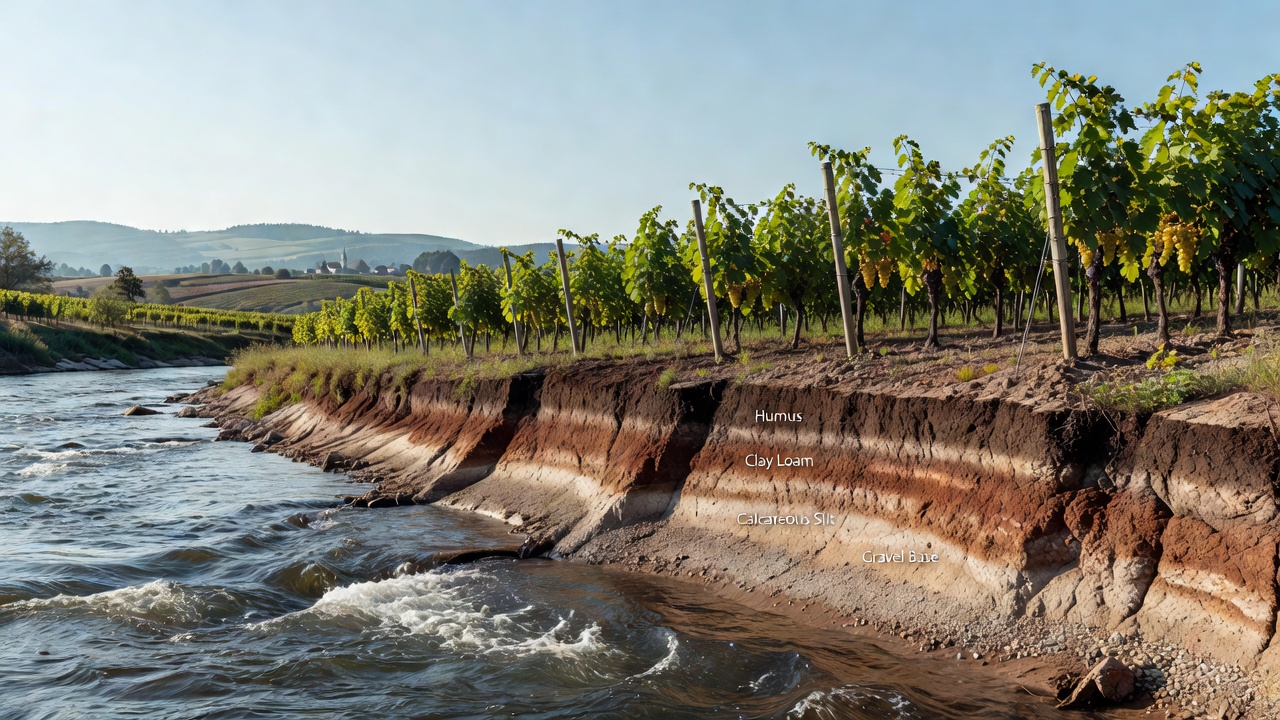
Analyses conducted by teams from the Austrian Federal Office for Viticulture reveal that pH values shift between layers with more acidic conditions near the surface promoting certain yeast interactions during fermentation while alkaline deeper zones influence tannin structure in red wines. Those who have mapped these sites note that the combination of river-deposited materials and underlying geology creates pockets where single vineyard parcels can produce wines with markedly different flavor trajectories despite similar grape varieties and winemaking techniques.
Flavor Development in Specific Overlooked Areas
Particular zones along the March River and in the Seewinkel region demonstrate how these factors converge because river currents moderate nighttime temperatures while soil layers provide both water retention and mineral diversity, and this interplay supports extended hang times that develop secondary aromas such as white pepper in Grüner Veltliner alongside dark fruit and spice elements in local red varieties. Figures from harvest records indicate that parcels with pronounced gravel layers often yield wines showing brighter acidity whereas those on silt-dominated soils produce fuller body and softer mouthfeel.
In August 2026 ongoing monitoring programs will expand sampling across these eastern pockets to track annual variations in sediment deposition and its correlation with vintage characteristics, and preliminary models suggest that shifts in river management upstream could alter future soil profiles if flood patterns change. People working in the region already incorporate these insights when selecting rootstocks that match specific layer combinations to optimize flavor expression without altering traditional practices.
Interactions Between Currents, Soils, and Grape Chemistry
Current-driven temperature regulation combines with soil-derived minerals to affect sugar accumulation and acid retention during the growing season, and chemical analyses show elevated levels of certain trace elements like manganese in wines from gravelly river terraces which some attribute to enhanced enzyme activity in the grapes. Observers have tracked how loess layers buffer against extreme weather events by storing winter moisture that sustains vines through summer heat while river proximity supplies cooling breezes that protect against late frosts common in more inland Austrian sites.
Comparative data drawn from research published by the University of Adelaide on similar river-influenced terroirs elsewhere highlights parallel mechanisms though local conditions in Austria differ due to the unique Pannonian geological history, and this cross-regional perspective helps explain why eastern Austrian wines display distinctive flavor signatures that set them apart from western or southern counterparts.
Conclusion
River currents and soil layers together form the foundation for flavor development across Austria's overlooked eastern vineyard pockets through sediment deposition, moisture regulation, and mineral availability that shape grape composition at every stage. Evidence from multiple studies confirms these interactions produce measurable differences in acidity, phenolics, and aromatic profiles that appear consistently across vintages when environmental conditions remain stable. Continued monitoring through programs scheduled for August 2026 will provide additional data on how these natural processes evolve, and such information supports precise vineyard management that preserves the distinctive character of wines from these areas.