How Historical Flood Barriers Evolved into Protective Structures for Austria's Riverside Grape Plantations
Geschrieben von Frankie Becker · 21.9.2026
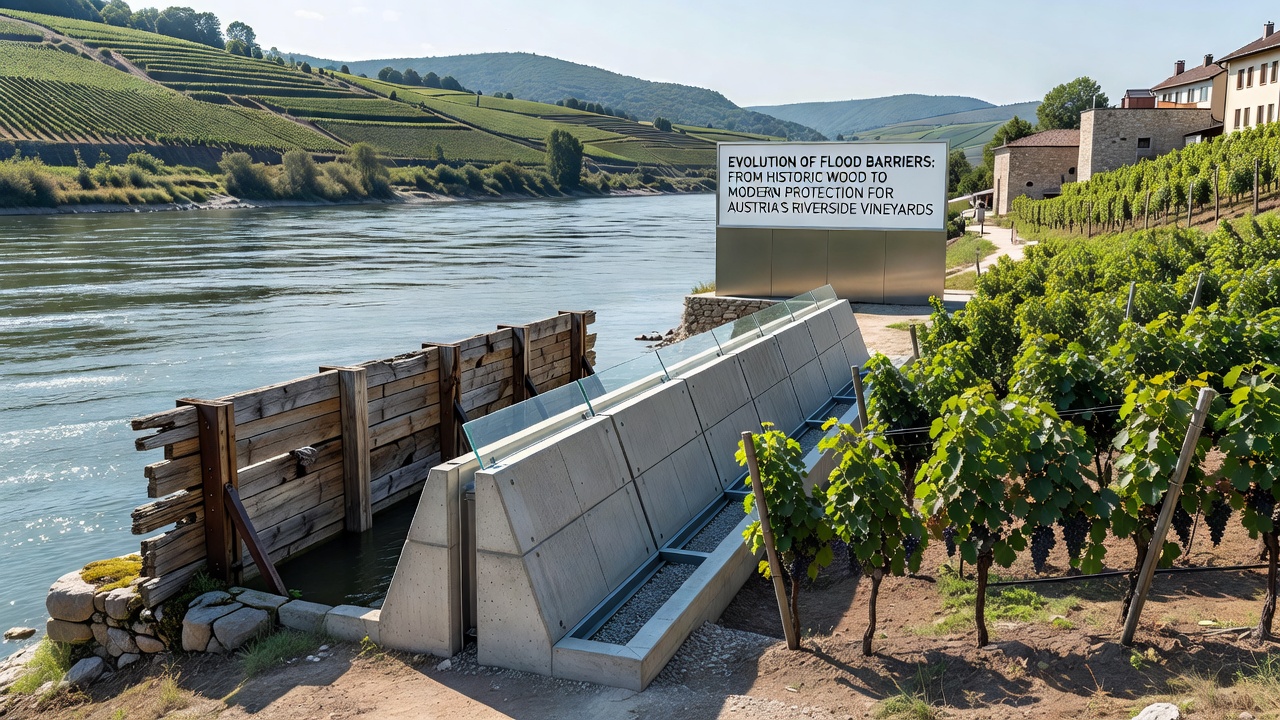
How Historical Flood Barriers Evolved into Protective Structures for Austria's Riverside Grape Plantations
Early Origins of River Control in Austrian Vineyards
Records from Roman settlements along the Danube show that earthen embankments and timber reinforcements were constructed to manage seasonal floods, and these early structures protected emerging agricultural plots that later included grapevines in regions such as Lower Austria. Over subsequent centuries, medieval communities expanded these barriers with stone revetments and drainage channels, which directed excess water away from low-lying fields while preserving access to fertile alluvial soils essential for viticulture.
Archaeological evidence indicates that by the 16th century, local authorities coordinated the heightening of levees in response to documented flood events, and this work coincided with the expansion of riverside plantations that relied on consistent soil moisture without waterlogging. Those who've studied regional engineering note that the barriers began incorporating spillways and sluice gates, allowing controlled inundation that replenished nutrients in vineyard soils during non-critical periods.
Transition Through the 19th and 20th Centuries
Industrial-era projects introduced concrete and steel reinforcements to older earthworks along the Danube and its tributaries, and these upgrades addressed increased flood risks from upstream deforestation and urbanization. Data from the Austrian Environment Agency shows that systematic mapping of river courses in the late 1800s guided the placement of protective dikes that encircled expanding grape plantations, shielding root systems from erosion during high-water events.
By the mid-20th century, integrated systems combined flood walls with irrigation infrastructure, enabling growers to maintain vine health in areas prone to both drought and overflow, while researchers at the University of Natural Resources and Life Sciences in Vienna documented how these adaptations stabilized yields in riverside locations. What's interesting is that older timber elements were often retained as secondary supports beneath modern cladding, preserving historical layers while meeting contemporary load requirements.
Modern Engineering Adaptations for Vineyard Protection
Current designs integrate sensor networks and automated gates that respond to real-time water level data, and these features allow precise regulation of flows around sensitive plantation zones without disrupting vine growth cycles. European Environment Agency reports on the EU Floods Directive highlight how Austrian implementations along the Danube have reduced inundation frequency in agricultural corridors, supporting sustained production of varieties suited to the microclimates created by river proximity.
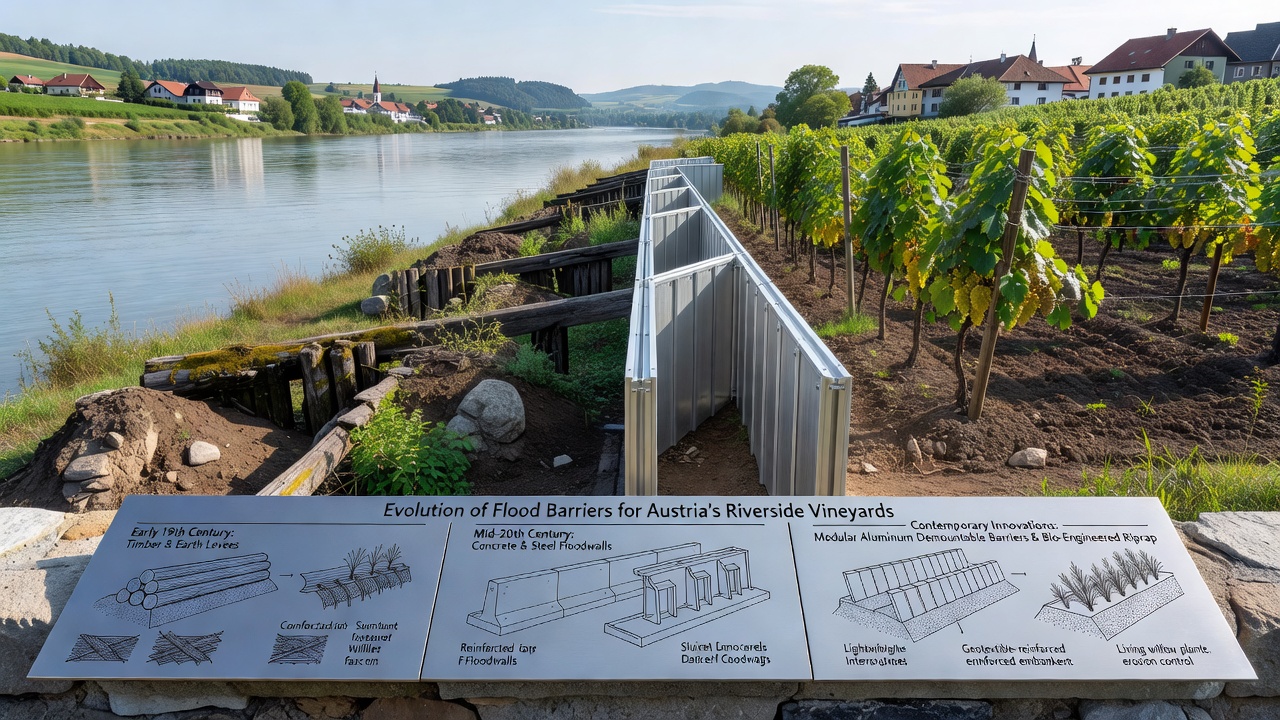
Engineers have layered bioengineered elements such as vegetated berms atop traditional barriers, which stabilize soil and provide habitat corridors that benefit pollinators active in vineyard settings. Observers note that maintenance protocols now include seasonal inspections timed with harvest schedules, ensuring structural integrity coincides with peak operational demands in cooperative vineyard groups. Plans for further refinements, including upgraded monitoring stations, are scheduled to reach key milestones in September 2026 according to federal infrastructure timelines.
Integration with Regional Water Management Practices
Collaboration between agricultural cooperatives and river basin authorities has produced multifunctional barriers that also facilitate sediment management, and this dual role helps maintain the nutrient profiles that contribute to distinctive wine characteristics in eastern Austrian pockets. Figures from long-term monitoring programs reveal that controlled water retention behind these structures supports consistent berry development during variable weather patterns, reducing losses previously associated with uncontrolled flooding.
Case examples from the Wachau and adjacent valleys demonstrate how retrofitted sections of historical levees now incorporate overflow basins that double as recreational paths during dry seasons, and these adaptations reflect coordinated planning across multiple stakeholder groups. Those involved in regional studies emphasize that the evolution prioritizes compatibility with existing terraced layouts, avoiding disruption to established vine training systems.
Conclusion
The progression from rudimentary embankments to sophisticated, data-driven protective systems illustrates a sustained response to hydrological challenges in Austria's riverside grape plantations, with each phase building on prior engineering while addressing emerging environmental pressures. Continued investment in these structures supports the resilience of viticultural operations along major waterways, and project schedules point toward incremental enhancements through 2026 and beyond.