Echoes of Alpine Passes: How Winemaker Migrations Shaped Rare Grape Crossings in Austria's High-Altitude Plots
Geschrieben von Jordan Vogel · 5.10.2026
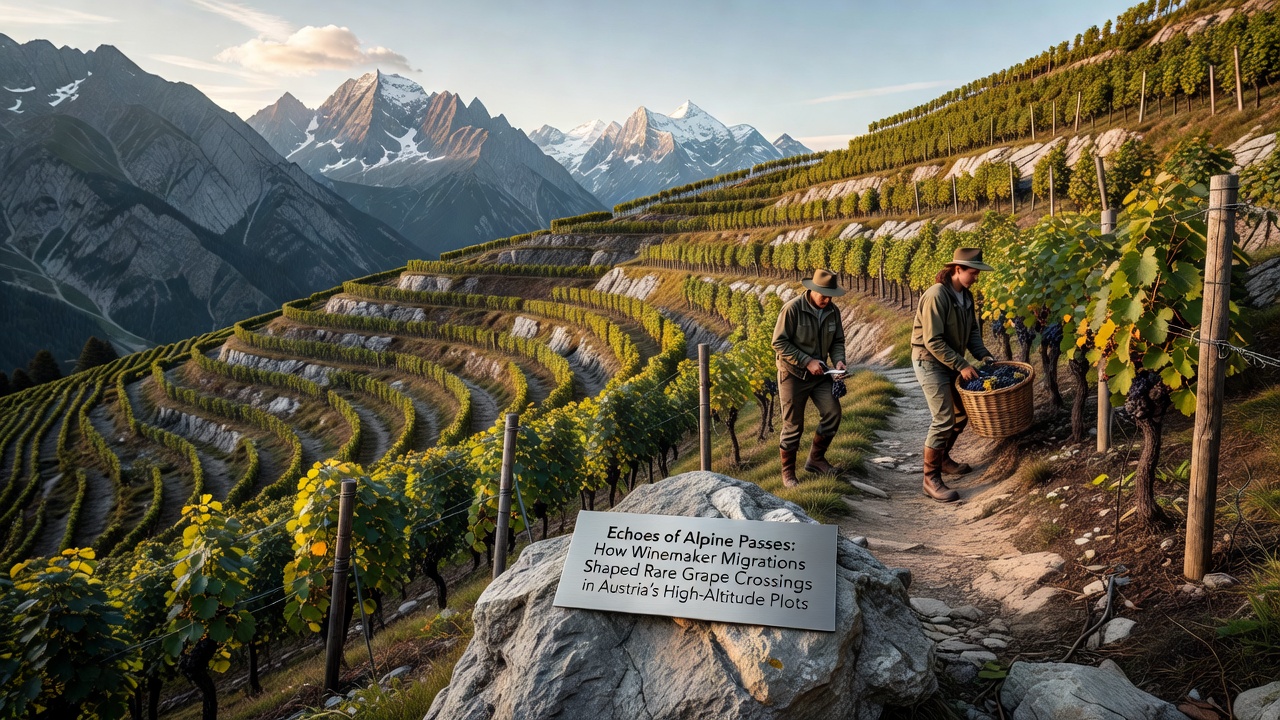
Echoes of Alpine Passes: How Winemaker Migrations Shaped Rare Grape Crossings in Austria's High-Altitude Plots
Winemaker migrations across Alpine passes have left measurable traces in Austria's high-altitude vineyards, where grape varieties from different regions came into contact and produced documented crossings. Historical records from the 12th through 16th centuries show traders and settlers moving between northern Italy, the Swiss cantons, and the eastern Alpine valleys, carrying vine cuttings that later adapted to cooler, steeper sites above 600 meters. These movements coincide with the appearance of several interspecific hybrids now associated with plots in Styria and the western reaches of Lower Austria.
Routes and Early Introductions
Travelers followed established passes such as the Brenner and the Semmering, bringing cultivars that included early forms of what became local selections. Archival ledgers from monastic estates note the arrival of southern varieties alongside indigenous vines already established on south-facing slopes. Genetic studies later confirmed shared markers between certain Austrian highland selections and Italian and Swiss accessions, indicating repeated introductions rather than single events.
By the late medieval period, seasonal labor movements had increased the frequency of these exchanges. Workers who returned from harvest work in neighboring regions sometimes carried small quantities of cuttings, planting them in test rows at higher elevations where ripening periods extended into October. Observers recorded that some of these plants survived late frosts better than local stock, leading to deliberate propagation on terraced sites.
Documented Crossings in Elevated Sites
Researchers have identified several rare crossings whose parentage traces to these migration patterns. One group of white-berried selections found in high Styrian plots shows chloroplast DNA consistent with northern Italian sources combined with nuclear contributions from local wild vines. Another set of red-berried cultivars in the western Alpine foothills exhibits markers linking them to material carried across the passes in the 15th century. These combinations appear only in plots above 550 meters, where temperature differentials during flowering favored natural hybridization before controlled breeding became widespread.

Data from ampelographic surveys conducted between 2018 and 2024 list at least four such selections maintained in germplasm collections at research stations near Graz and Innsbruck. Propagation records indicate that cuttings were shared among cooperative groups operating in adjacent valleys, spreading the material across a narrow band of high-elevation sites while limiting wider distribution to lower, warmer regions.
Adaptation Factors at Altitude
Elevation influences both the survival of these crossings and their fruit chemistry. Cooler nights slow sugar accumulation while preserving acidity, a pattern noted in harvest data collected from plots between 700 and 900 meters. Soil profiles in these locations often contain higher proportions of mica and schist, which retain moisture differently than the loess and gravel found at lower altitudes. Winemakers who continued seasonal movements into the 19th century selected vines that performed consistently under these conditions, reinforcing the presence of the hybrid types.
October 2026 marks the scheduled release of a new genetic mapping project coordinated by the University of Natural Resources and Life Sciences in Vienna, in partnership with the International Organisation of Vine and Wine. The study will sequence additional accessions from high-altitude collections to clarify the timing and number of migration events that contributed to the current diversity. Preliminary summaries released in 2025 already indicate that at least two of the selections show evidence of multiple introgression events rather than single crosses.
Preservation and Current Plantings
Today, a limited number of commercial vineyards maintain small blocks of these rare crossings, primarily for experimental wines and regional heritage programs. Figures released by the Austrian Wine Marketing Board show that plantings above 600 meters account for less than three percent of total national vineyard area, yet they contain a disproportionate share of these historically layered varieties. Conservation efforts focus on maintaining clonal diversity rather than expanding acreage, with cuttings distributed only through certified channels to prevent disease introduction.
Trade records from the 18th century onward document continued movement of plant material along the same passes, now accompanied by written descriptions of performance at elevation. These accounts align with modern DNA results that place the origin of certain highland selections within narrow temporal windows corresponding to documented migration peaks.
Conclusion
The pattern of grape crossings in Austria's high-altitude plots reflects repeated contact between migrating winemakers and local growing conditions. Genetic, archival, and agronomic data together trace these developments to specific routes and time periods without requiring assumptions about intent. Ongoing research scheduled for release in October 2026 will add further resolution to the timeline while the physical plantings remain concentrated in the same elevated sites where the crossings first became established.